Jeff Watson Casino Queen
Metro-east casinos lose revenue; Spread of video gaming has hurt business
21 Casino Queen reviews. A free inside look at company reviews and salaries posted anonymously by employees. Best Cities for Jobs 2020 NEW! Jeff Watson, president and general manager of the Casino Queen said of the deal, “Through this acquisition, the racetrack gets the opportunity to add the slots that are vital to its long-term.
- By Will Buss News-Democrat The Casino Queen has started the new year on a low note. Louis riverboat casino has laid off about 20 workers, including managers, earlier this month amid declining revenue. Casino president and general manager Jeff Watson said that since the current casino opened in 2007, in place of.
- The employee stock ownership program will be managed by co-trustees Jeff Watson, the Casino Queen’s general manager and president, and Chief Financial Officer Robert Barrows. Through the ESOP.
- The Casino Queen in East St. Louis, Ill., is raising the stakes in its bid to capture a larger share of the local gaming market with the start of construction on a new $2.15 million sports bar and entertainment venue that will enhance the overall experience for guests. The 6,250-square-foot facility has been coined “SEVENS,” and will house pieces from the St. Louis Cardinals Museum Collection.
By Will Buss
News-Democrat
The Casino Queen has started the new year on a low note.
The East St. Louis riverboat casino has laid off about 20 workers, including managers, earlier this month amid declining revenue. Casino president and general manager Jeff Watson said that since the current casino opened in 2007, in place of the first one that opened along the East St. Louis riverfront in 1993, the number of casino employees have been reduced by half, from 1,200 to 600.
The casino has recently cut two hours from its hours of operation. It is now open 20 hours a day, instead of 22, and closes at 4 a.m., instead of 6 a.m.
“Eventually, we may not stay open even that long on a daily basis,” Watson said.
The riverboat casino’s revenue has fallen. According to the latest numbers from the Illinois Gaming Board, adjusted gross receipts collected from January through November last year from electronic gaming devices at the Casino Queen in East St. Louis dropped by more than 13 percent between January and November compared to that same span in 2013. Meanwhile the adjusted gross receipts at the casino’s table games increased by 2.5 percent in that time.
The Argosy Casino Alton witnessed a 7.9 percent decline in adjusted gross receipts from electronic gaming between 2013 and 2014 and a 13 percent drop in table gaming in that same time.
The drop in electronic gaming comes as more independent video gaming parlors have opened across the metro-east. The state legalized video gambling in public places outside casinos in 2009. Machines started appearing in the metro-east about three years ago in bars, restaurants, fraternal organizations and gaming parlors. According to the state gaming board’s latest figures, more than 3,200 of these gaming parlors were in operation a year ago, at the end of 2013.
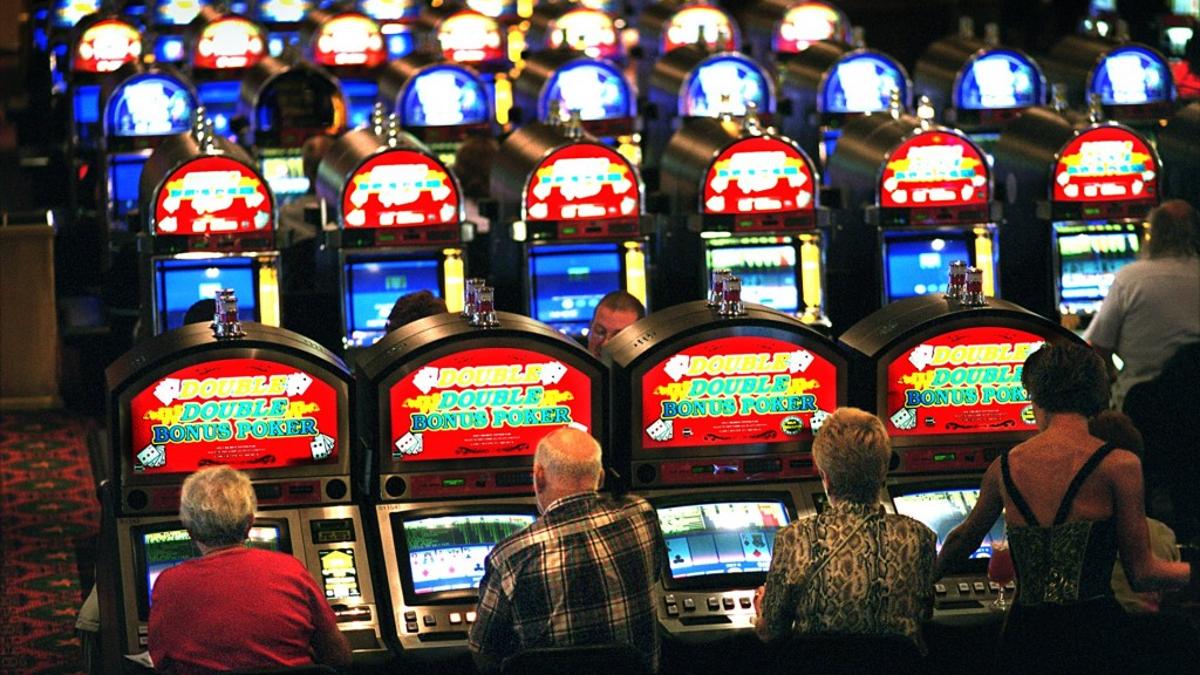
Watson said the proliferation of video gaming parlors that permit establishments with a liquor license to apply for up to five video gaming terminals has been taking away business. Watson said the Casino Queen struggles to compete with casinos across the river.
“They have put a video gaming machine in every bar and restaurant and VFW hall with a liquor license, and the dilution rate is showing,” Watson said. “And that’s why this has impacted casinos and their revenue. There is a direct correlation between the two.”
One of these video gaming parlors is Emma’s Video Gaming Cafe, located inside Dennis Keck’s Millstadt restaurant, Smokin’ K’s BBQ & More. Keck opened the gaming area off to the side of his restaurant in February and has seen many patrons come in to gamble before or after a meal. Keck believes customers enjoy the ease and convenience of gambling at his gaming parlor rather than traveling to a casino.
“I’m sure that has a lot to do with it, at least for some in Millstadt or from South County who come over here, and not to the casino, because we’re right here,” Keck said. “If you go to the casino, you have to fight traffic down there.”
Jeff Watson Casino Queens
Millstadt resident Roger Guebert likes to gamble at the Millstadt video gaming parlor. He said there are four others in town like it, which are more convenient for him.
“It’s just handier,” Guebert said. “You can just come in and sit down and play. I just think the convenience is the big thing.”
Jeff Watson Casino Queen
Illinois Casino Gaming Association Executive Director Tom Swoik said riverboat casino revenue and admission across Illinois is down. He also said the smoking ban that went into effect in 2008 initially took about 15 percent of business away from Illinois casinos.
“Overall, the admissions are down,” Swoik said. “The people have got to be going somewhere to play, and video gaming revenue is up. That’s got to be where they’re going.”
Illinois Gaming Machine Operators Association President Michael Gelatka said these new gambling parlors are attracting customers who might have never visited a casino before and are helping municipalities generate additional revenue.
“I think that there are additional players that you’re getting who would have otherwise gone to casinos in Missouri who have begin to play back in Illinois,” Gelatka said. “I think there are a lot more players in Illinois as a result of it, but I think there are a lot of smaller businesses that are benefiting, even if casinos have been hurt to some extent.”
Watson said this has only made the state’s gambling industry more competitive.
“We are by far the most saturated gaming area in the country,” he said. “Adding more gaming spots in here keeps cutting a pie that already has been cut into many pieces and fewer slices. The impact here is like any business. We have to react to that with less employees and have to adjust by opening less hours a day.”
December 28, 2012 11:44 amJeff Watson Casino Queen
In what is believed a first of its kind in the USA, the Casino Queen in East St. Louis has been bought for $170 million by 700 of its employees as part of an employee stock ownership plan (ESOP). The ESOP will now be managed by co-trustees Chief Financial Officer Robert Barrows and the Casino Queen’s general manager Jeff Watson who, after the sale was completed, commented:
“To my knowledge, it’s the first ESOP casino in the country. It allows employees to become beneficial owners in the company. The more successful the company is, the more value employees have individually in their retirement accounts.”
In 1995, the Koman family replaced the then riverboat casino with a new $92 million casino development, which in the process became the first Illinois casinos to move from the river to a land-based location. Since then the Koman family have maintained a 20% stake in the Casino Queen, with the rest accounted for by private investors.
Due to the recession and increased competition, however, the Casino Queen has suffered from declining business and back in 2006, a $200 million offer by Columbia Sussex to buy the Queen fell through. So far this year the casino’s revenue has totaled $120.9 million, around one-third down on its 2007 peak of $172.1 million.
The latest deal to buy the Casino Queen includes assuming $31 million of its existing debt. It is also hoped that the new owners will be able to return the 1,100 slot machines and 27 table casino to profitability, and as Loren Rodgers from the National Center for Employee Ownership, explains: “It tends to be a more stable form of ownership. ESOP companies know they have something to lose if there is a change in ownership.”